
Solar Panels in Pakistan: How to Choose the Right Panel for Your Home or Business
Which solar panel is best in Pakistan? The quick answer
Start with genuine 645W TOPCon and back-contact models, then choose by usable rooftop space, electrical compatibility, installed cost and local support. Our current shortlist includes Jinko Solar, LONGi Solar and AIKO. The first two offer comparable rated efficiency in the specific 645W models below; AIKO’s listed 665W model reaches 24.6%. Check its product page for current stock and price.
The best solar panel is the one your system can use well. A higher wattage or a famous logo cannot compensate for shade, a poor mounting layout or an unsuitable electrical design.
A shop quote often starts with a brand and ends with a price. The useful questions come in between: which model, how much usable roof area, what output in heat, and who handles a claim? Those details matter more than a broad “number one” ranking.
This article compares solar panels in Pakistan using current manufacturer documents and our catalogue. It is the 2027 planning revision of our 2026 guide, not a claim that next year’s stock, prices or regulations are already known. We sell solar products; links to our store are commercial links. We have not laboratory-tested every panel.
Jinko, LONGi and AIKO: current panel efficiency
Efficiency measures how much incoming light a module converts into rated electrical power under standard test conditions. A 24% module has more rated power per square metre than a 22% module. It does not produce its nameplate watts all day, and a laboratory cell-efficiency record is not the efficiency of the complete panel you buy.
The figures below are model-specific. Do not substitute a newer product-family maximum for an older shipment. Stock status reflects our catalogue at this update and must be confirmed before payment.
| Model listed in our store | Rated module efficiency | Evidence and availability |
|---|---|---|
| Jinko 645W JKM645N-66HL4M-BDV | 23.88% | Catalogue rating; also consistent with 645W ÷ (2.382m × 1.134m × 1,000W/m²). Listed for purchase; request the supplied unit’s matching datasheet. |
| LONGi 645W LR7-72HVD-645M | 23.9% | Manufacturer Explorer datasheet. Listed for purchase; verify model and document revision. |
| AIKO Stellar 665W AIKO-A665-GRH66Dw | 24.6% | Manufacturer Stellar 2N+66 datasheet. See the product page for current price and availability; confirm the supplied model before ordering. |
| Crown 620W and Fronus 585W | Confirm from exact supplied datasheet | Listed alternatives. We are not assigning an unverified percentage from wattage alone. |
Check the Explorer model datasheet and AIKO model datasheet. The latter is a regional document: electrical ratings help identify the model, but regional coverage must still be confirmed locally.
For context, the manufacturer’s latest Tiger Neo 3.0 product page advertises 670W at 24.8%. That headline is not the rating of the 645W HL4M model above. High efficiency is useful on a small roof, but compare the exact supplied code before paying a premium.
Solar panel brands in Pakistan: what each quote should show
The solar panel brands available in Pakistan through different importers include international manufacturers and local catalogue options. Brands available in one city or shop may differ from another. When choosing the best solar panels, ask for a model-level comparison rather than a list of logos.
- TOPCon: widely used in modern monocrystalline solar panels. JA Solar DeepBlue 4.0 Pro, Canadian Solar TOPHiKu6 and Trina Solar Vertex S+ are examples of families to investigate when locally supplied.
- Back contact: compare HPBC and ABC designs where roof area is expensive or limited. LONGi panels include different architectures; Hi-MO 7 and X10 specifications should not be treated as interchangeable.
- Local alternatives: compare Crown, Fronus and other offers using the same invoice, model, electrical and claim-route checks. A lower price deserves inspection, not an automatic rejection.
These solar brands are not a guarantee of identical quality across every shipment. The panel manufacturer datasheet, the serial number on the delivered unit and a traceable seller should agree. Check the JA technical white paper, TOPHiKu6 documentation and Vertex S+ specifications for the relevant family. Their global pages do not prove local stock.
JA Solar, Canadian Solar and Trina Solar: alternative quotes
Request the supplied model’s electrical ratings, dimensions and applicable regional support terms. These manufacturers offer multiple families, so compare the shipment you can actually buy rather than an unrelated premium model.
Solar technology and solar energy: TOPCon or back contact?
N-type TOPCon refers to a cell architecture; monocrystalline panels describe the crystalline silicon material. Back-contact designs move contacts away from the light-facing surface. Compare rated module output, dimensions and temperature behaviour rather than buying a technology name.
Bifacial panels can also collect reflected light at the rear. The extra output depends on clearance, mounting and the surface below. Close mounting above a dark roof can limit the benefit. Polycrystalline panels may appear in older or budget offers; compare the space and mounting needed for the same array capacity.
Tier-1 solar panels: what the classification tells you
Buyers often search for tier-1 panels or tier-1 brands as a shortcut. BloombergNEF’s classification uses project and asset-finance criteria; it is not a laboratory grade for the individual unit. Genuine documentation and local support still matter. Read the classification explanation.
Choosing the right solar panel: six checks before paying
1. Use the actual roof layout
Allow for water tanks, access paths, parapets and morning or afternoon shade. A larger module can reduce the number of pieces without fitting the available spaces efficiently. Request a layout with dimensions and maintenance access. The Department of Energy’s roof-suitability guidance explains the physical checks; its US financial assumptions do not apply here.
2. Compare heat performance
Solar performance changes with cell temperature. Look for the Pmax temperature coefficient: a value closer to zero means a smaller rated reduction for the same temperature rise. Our listed HL4M module states −0.29%/°C; the Explorer and ABC models state −0.26%/°C. Confirm those values against the supplied labels and documents.
For illustration, at a cell temperature 30°C above the reference, these coefficients imply approximately 8.7% and 7.8% power reductions respectively, before other losses. That 0.9 percentage-point difference is not a guaranteed daily energy gain. Air temperature, cell temperature, dust and ventilation are separate factors.
3. Check inverter compatibility
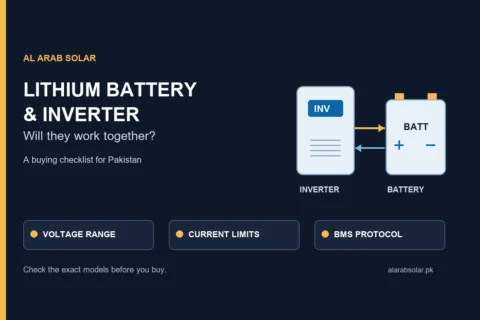
Have an installer check Voc, Isc, Vmp, Imp, string length and the temperature allowance against your inverter’s PV limits. Matching rated kilowatts alone is insufficient. The MPPT voltage window and maximum input current can rule out an otherwise attractive panel.
4. Verify the delivered units
Record serial numbers and match the rear labels to the quotation. Inspect the glass, frame, junction box and connectors. Ask how authenticity can be verified through the manufacturer. A QR sticker or a handwritten “A-grade” label alone does not establish quality solar equipment.
5. Check product warranty and output protection
A product warranty covers defined defects; a performance warranty concerns the stated power-output level over time. Neither automatically means replacement at your doorstep. Obtain the applicable regional terms, claim provider, exclusions and transport arrangements in writing. Our warranty and claims guide explains what to confirm.
6. Compare complete installed quotes
A reliable solar installation includes suitable structure, cabling, connectors, DC/AC protection and labour. For commercial solar projects, also check access, structural loading and maintenance arrangements. Cheap components or careless installation can undermine long-term performance even when the modules are genuine.
Ask each supplier to itemise its solar solutions. A complete solar package should identify every major component and state what is excluded. Compare like-for-like energy solutions before accepting a total price.
Solar panel prices in Pakistan: compare PKR per watt
Divide the panel price by its rated front-side watts. As an arithmetic example, PKR 26,000 ÷ 645W is PKR 40.31/W, while PKR 24,000 ÷ 585W is PKR 41.03/W. These are examples, not current offers. The larger panel costs more per piece but less per rated watt in this comparison.
Use our live catalogue for current listed rates, then confirm the final quantity, stock and supplied model. Panel-only prices cannot be compared directly with a solar system price that includes mounting, conversion equipment, protection and labour.
5kW solar system: panel count and system size
Eight 645W modules give 5,160W, or 5.16kWp of rated DC array capacity. That does not guarantee a continuous 5kW AC supply. System size must reflect your load, usable space, equipment limits and consumption schedule. Begin with the load calculator, then obtain a string design.
A hybrid solar setup can add storage, but panels generate energy rather than storing it. Match a hybrid inverter to the array and the required backup battery. Decide how many hours of essential loads need support before comparing battery capacity.
Net metering in Pakistan and your electricity bill
Long-term savings depend on daytime use, shading, system output, tariffs, maintenance and applicable export arrangements. A manufacturer cannot promise a zero bill. The right solar energy solutions should be based on your consumption, not only an optimistic payback slide.
If your quote relies on net metering in Pakistan, check the latest NEPRA regulations and amendments and your utility’s treatment of the specific connection. Existing agreements and new applications should not be assumed to have identical arrangements. This guide does not quote an export rate or promise that a 2025 policy assumption still applies.
Best solar panels in Pakistan for 2027: what could change?
Our outlook: expect model-level efficiency, heat performance and installed cost to remain more useful than a brand-wide winner. TOPCon and back-contact products are both worth comparing. This is a planning judgement from current product developments, not confirmed 2027 availability.
The solar industry is still developing these platforms. The current 670W manufacturer headline reaches 24.8%, while back-contact technology updates describe further improvements. High-efficiency solar equipment may bring more watts into a fixed area, but a newer generation can also change dimensions, current ratings and price.
Do not postpone a suitable purchase only because a future model is rumoured. Conversely, do not pay today for a specification that belongs to a product your supplier cannot deliver. Ask for the exact code, an available shipment and a dated quotation.
Pakistan’s solar market also depends on import costs, exchange rates, supply and utility rules. Availability across Pakistan is not uniform. We are not predicting next year’s rupee prices, export payments or a guaranteed percentage increase in output.
Solar panels in Pakistan 2026: what to recheck for 2027
If you are comparing solar panels in Pakistan 2026 search results with this edition, check whether the quoted efficiency belongs to the same module code. A search for “solar panel brands in Pakistan 2026” can bring up useful starting points. Comparisons of panel brands in Pakistan for 2026 are snapshots: their stock, rates and documents need a fresh check for a 2027 order.
We keep this page’s address unchanged. At each substantive update we will recheck models and local stock, replace superseded datasheets, revise efficiencies and heat ratings, review price examples and utility requirements, and add the actual review date. A year change alone will not count as a factual update.
The buying checklist remains useful between editions. Our current Pakistan solar power catalogue is the place to confirm individual offers; the annual guide explains how to compare them.
Questions about choosing the best solar panel
Which is the best solar panel brand for a small roof?
Choose by rated watts per square metre and a workable layout. Back-contact options can help where space is limited, but compare their extra cost with the actual additional capacity you can install. No manufacturer wins every small-roof comparison.
Are the two 645W options equally efficient?
The specific models in our table are rated around 23.9%. That does not make their heat coefficients, electrical current, shading behaviour or local support identical. Choosing the right equipment requires those checks as well.
Is 24.6% efficiency the same as 24.6% more energy?
No. It is the module’s rated conversion efficiency under standard test conditions, not an additional energy gain over another product. Compare both products under the same conditions and consider the installation.
Should I choose the cheapest quote?
Choose the lowest sensible installed cost for documented, compatible equipment. Missing serial records, unclear claim support or an unitemised structure can make a cheap quote expensive later. Good solar energy starts with an honest design and clear documentation.
Can I order from outside your delivery area?
Al Arab Solar is based in Shah Latif Town, Karachi. Delivery is currently across Karachi only. Confirm collection or delivery arrangements and the final quotation before payment.
Compare the panels that fit your setup
Send your equipment model, usable roof dimensions and desired backup loads. We can help narrow the options and confirm current stock and rate.
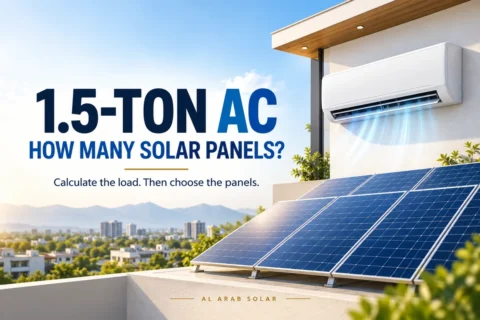
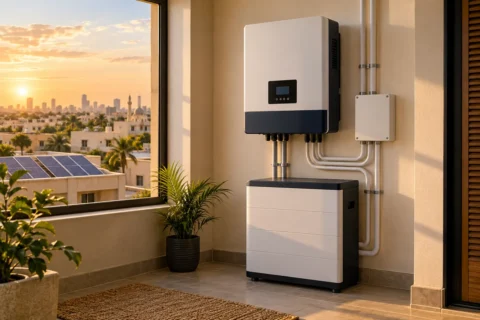
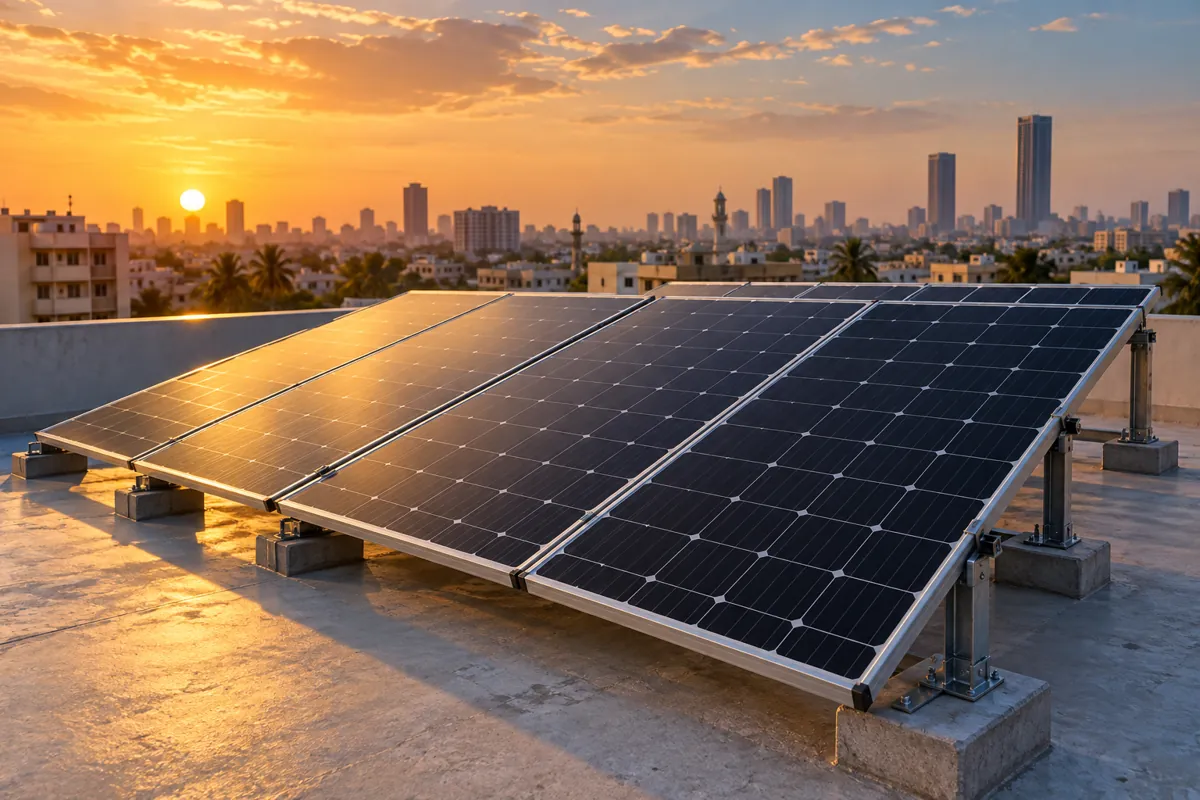
Editorial note: this is a model-document and catalogue comparison, not an independent laboratory ranking. The cover is an AI-generated illustrative editorial image, not a photographed installation for our store. Last reviewed 10 October 2026; 2027 statements are expressly labelled as outlook.